
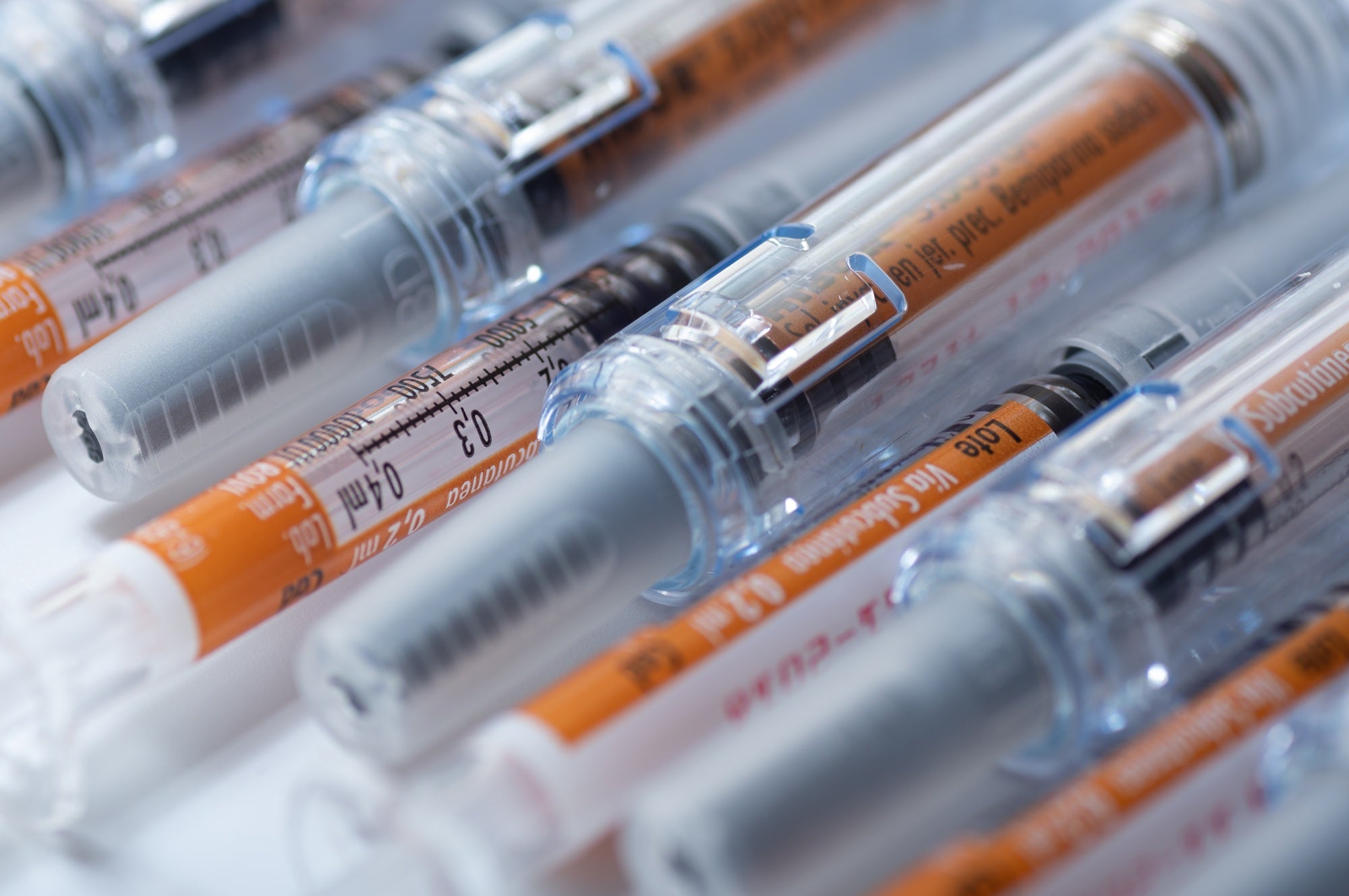
Reducing Heparin Administration Errors at Multistate Health System
Problem
A multistate nonprofit health system identified a pattern of recurring errors related to the administration of heparin, a high-risk anticoagulant, across multiple hospitals in its system. Heparin errors pose significant patient safety risks, including the potential for under- or overdosing, which can lead to serious patient harm. A system-wide data repository revealed that the six most common types of errors include:
- Failure to adjust heparin drip rates per protocol
- Incorrect values entered into infusion pumps
- Delayed partial thromboplastin time (PTT) draws
- Incorrect weight entries in infusion pumps
- Data entered into the wrong fields in infusion pumps
- Boluses not administered or documented properly
Given the complexity of heparin administration, a comprehensive approach was needed to address these problems.
Solution
To mitigate this challenge, the organization partnered with ECRI’s Human Factors Engineering (HFE) team to address underlying issues by uncovering hidden barriers to safe heparin administration. By leveraging a humancentered, systems-based approach, they could ensure clinical workflows, care environments, organizational policies, training programs, tools, and processes support safe and effective healthcare delivery, ultimately leading to improved patient outcomes.
Human Factors Engineering System Analysis
Between March and October 2023, ECRI’s HFE team conducted phase 1 of a System Analysis to identify the factors that contribute to each of the six most common heparin administration errors. When the ECRI HFE team performs a System Analysis, they investigate how different components of healthcare systems contribute individually and
how these components interact with each other to contribute to safety risks. Healthcare facilities and the HFE team can then use that information to innovate and implement robust solutions that prevent future harm. In general, a System Analysis entails examining the components of healthcare systems to understand and identify how interactions among system components influence outcomes, and using this information to design safer, more
effective work systems.
By considering all the major components of a health system—people, tools and technologies, tasks and processes, physical environment, organizational policies and culture, and external influences—a System Analysis finds an increased number of contributing factors to an adverse event compared with a typical root cause analysis.
This provides a deeper understanding of how the event happened, which affords a greater number of potential solutions and better insight into how to implement effective and sustainable solutions. By participating in a HFE System Analysis, healthcare professionals learn to use systems thinking to address patient safety challenges.
ECRI's HFE team performed a detailed analysis of the heparin administration process, to identify improvement opportunities.
- Phase I: Analyze to Understand
- Phase II: Collaborate to Innovate
- Phase III: Implement and Evaluate
Clinically Informed Human Factors Engineering
During Phase I of ECRI’s HFE System Analysis, the team conducted interviews and direct observations of workflows at several hospitals.
Through on-site visits, the HFE team was able to understand the different types of high-frequency heparin administration errors from a systems perspective. The HFE team gathered input from frontline nurses, pharmacists, safety professionals, and informaticists. The investigation identified several factors that contribute to the recurring errors in heparin administration, including the following:
- Electronic medical record (EMR) order displays: Nurses struggled with confusing and lengthy heparin order screens, which displayed the heparin range information much more prominently than the specific heparin rate that needed to be programmed into pumps.
- Inconsistent infusion pump interfaces: Mismatches between the sequence in which the EMR presents values that are programmed into infusion pumps and the sequence in which those fields are shown on some of the pump interfaces led to pump programming errors. (This problem will be resolved once all hospitals have transitioned to a new standardized pump, which will be integrated with the EMR.)
- The EMR requires nurses to document heparin bolus administration separately from a heparin rate change: Heparin needs to be titrated, and adjustments can include giving a bolus as well as changing the infusion rate. As a result, orders for heparin include both an ongoing infusion order and a PRN bolus order. The EMR requires users to navigate away from the screen used to document that a medication from an ongoing order has been administered to document that a PRN medication has been administered, adding length and complexity when boluses are required.
- Nurse-driven heparin protocol (NDHP): The protocol had four pages of fairly dense text and included unnecessary information. The information needed for heparin rate changes started on page 2, and it was somewhat cluttered and sometimes redundant. In short, the NDHP document accessed through the EMR
was unnecessarily difficult to use.
During Phase II of their System Analysis, the HFE team facilitated remote and on-site design sessions with representative stakeholders to collaboratively innovate strong systems-based solutions.
Systems-Based Solutions
Based on ECRI’s recommendations, the health system is working on implementing several targeted changes to improve the safety and efficiency of heparin administration. Examples are:
- Redesign of heparin order display: The screens displaying heparin orders in the EMR are being redesigned to increase the salience of critical information, making it easier for nurses to find and use accurate data.
- Checklist for independent double-checks: A checklist can help to ensure that nurses who are asked to sign off on heparin administration know how to independently determine what the new rate should be and whether a bolus is indicated before they sign off.
- Nudge system in EMR: A “nudge” feature within the EMR, which prompts nurses to order PTT draws after a heparin rate change, is being explored. This feature would help reduce late PTT draws.
Conclusion
While the solutions that were produced through the collaboration between ECRI and the health system are still being implemented, they set the stage for a significant reduction in heparin administration errors. The initiatives to modify EMR interfaces, simplify and clarify the NDHP, equip all hospitals in the enterprise with the same infusion pumps, and
eventually integrate the pumps with the EMR, are expected to enhance patient safety and standardize care delivery across the health system.
By employing a systems approach, ECRI’s HFE team developed a deep understanding of how different system components and their interactions contribute to heparin administration errors. This understanding was the foundation for generating robust, sustainable solutions that will enable the health system to make meaningful progress toward safer, more reliable heparin administration.
As the health system implements these solutions, ongoing monitoring and assessment will help ensure that the changes lead to long-term benefits in patient care.
ECRI's HFE System Analysis helped generate sustainable solutions to enable meaningful progress toward safer, more reliable heparin administration.